24/7 Emergency Response
Water Damage Restoration in Gainesville, FL
Water damage can spread beneath floors, behind walls, and inside cabinets. Gainesville Restoration Group provides professional water damage restoration in Gainesville, FL for homes and businesses.
From water removal and extraction to structural drying, cleanup, and restoration, we help address the visible damage and moisture that may remain inside the property.
From water removal and extraction to structural drying, cleanup, and restoration, we help address the visible damage and moisture that may remain inside the property.
Water Damage Emergency?
Call for an assessment and next steps →
Emergency Water Damage Restoration in Gainesville
- Where the water came from
- Whether the source is still active
- Which rooms are affected
- Whether water has entered walls or flooring
- What materials have absorbed moisture
- Whether the water is contaminated
- Whether hidden moisture is present
A leaking pipe, failed water heater, overflowing toilet, appliance failure, or storm can turn into a much larger property problem if water remains in the structure.
The first assessment should establish:
The ANSI/IICRC S500 Standard for Professional Water Damage Restoration covers inspection, water damage science, drying technology, equipment, safety, documentation, structural restoration, and contents restoration for residential and commercial buildings.
What should you do first after water damage?
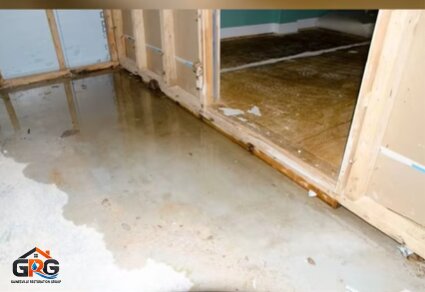
If it is safe, stop the water source and keep people and pets away from unsafe areas. Do not use electrical equipment while standing in water. Move valuables away from the affected area only when you can do so without putting yourself at risk.
Photograph the damage and affected belongings for your records. If water has spread beyond a small, isolated area or has entered building materials, arrange an assessment before assuming the property is dry.
WHAT WE DO
Water Damage Restoration Services
Professional restoration for water removal, structural drying, cleanup, sewage, flood, and storm water damage in Gainesville, FL.
Water Removal and Extraction
Standing water must be removed before the affected structure can be properly dried. The approach depends on the amount of water, where it collected, and the materials involved.
Structural Drying
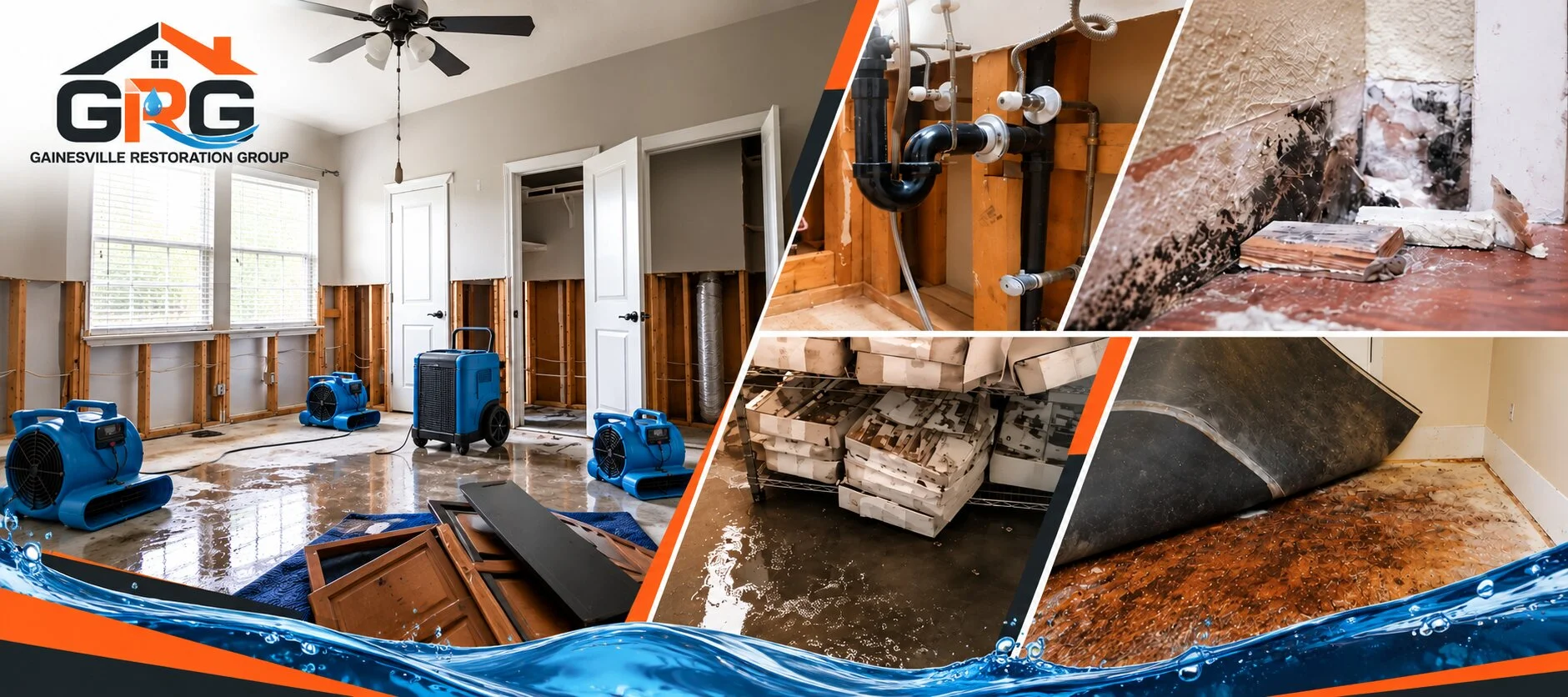
Drying focuses on moisture inside drywall, wood, subfloors, carpet padding, cabinets, insulation, and other materials, not only the water you can see.
Water Damage Cleanup
Cleanup may include removing damaged materials, cleaning affected surfaces, addressing odors, and preparing the property for repairs. The response depends on the water source and condition.
Sewage Cleanup
Sewage backups require extra precautions because wastewater may contain contaminants. Toilet overflows, sewer backups, and wastewater releases should be assessed before extensive cleanup.
05
Flood and Storm Water Damage
Storm water can enter through roofs, doors, windows, wall openings, and other vulnerable areas. Gainesville’s flood exposure makes proper assessment especially important after heavy rain or flooding.
06
Mold Remediation
Mold growth can develop when moisture remains inside a property. Water leaks, flooding, and damp building materials should be assessed to identify the moisture source and determine the appropriate remediation.
Common Causes of Water Damage in Gainesville
Water emergencies do not always begin with a major storm.
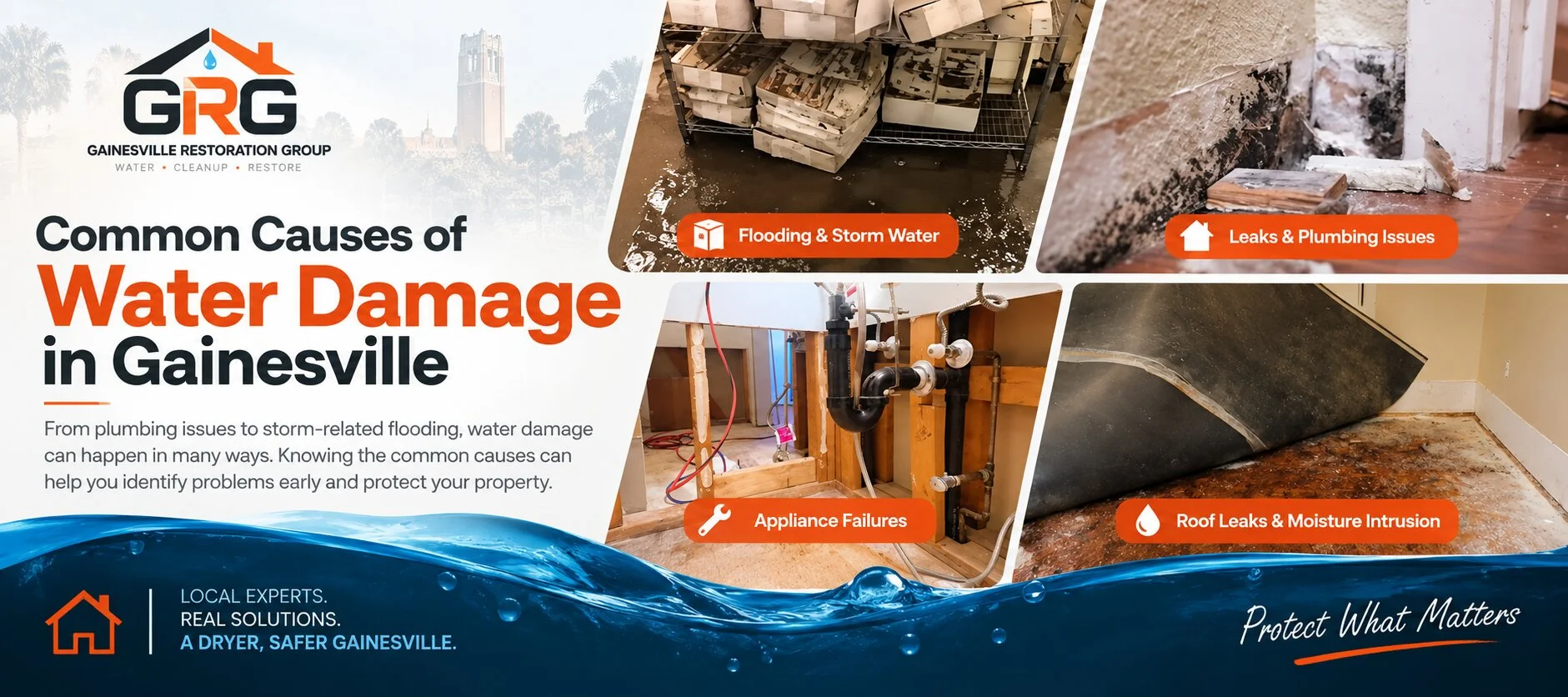
Common causes include:
- Burst and leaking pipes
- Water heater failures
- Washing machine leaks
- Dishwasher leaks
- Refrigerator and ice maker supply-line leaks
- Toilet overflows
- Clogged drains
- Sewer backups
- Roof leaks
- Storm water intrusion
- HVAC condensation
- Tub and sink overflows
The location of the leak often affects the type of damage that follows. A pipe inside a wall may affect drywall and insulation, while a failed appliance supply line can spread water across flooring and into cabinets.
Hidden Moisture
Why Water Damage Can Be Hidden
Visible standing water is easy to identify. Moisture inside a wall, beneath flooring, or under cabinets is not.
Water can remain in building materials after the surface appears dry. Hidden moisture is one reason a proper inspection should consider areas surrounding the obvious source of the loss.
The EPA notes that moisture can remain in hidden areas such as walls, ceilings, crawl spaces, and other building components, and recommends drying wet materials quickly.
Can water damage be hidden behind walls?
Yes. A plumbing leak, roof leak, or overflow can introduce moisture into a wall cavity without producing obvious surface damage immediately.
Possible signs include staining, swelling, soft drywall, damaged trim, peeling paint, unusual odors, or moisture near the original leak.
If concealed moisture is suspected, the affected area should be evaluated rather than judged by appearance alone.
Our Water Damage Restoration Process
A restoration project should follow a clear sequence so that the source, moisture, affected materials, and repairs are addressed in the right order.
1
Inspection and Damage Assessment
The affected property is evaluated to determine the source, extent, materials involved, and potential hidden moisture.
2
Source Control
The active water source needs to be stopped. Plumbing, roofing, HVAC, or other specialized repairs may require the appropriate trade professional.
3
Water Extraction
Standing water is removed from affected areas and materials.
4
Moisture Detection
Affected materials are checked for moisture that may not be visible.
5
Structural Drying
Air movement and dehumidification help reduce moisture within the structure.
6
Cleaning and Sanitization
Affected surfaces and materials are cleaned according to the source and condition of the water.
7
Repairs and Restoration
Damaged drywall, flooring, cabinets, insulation, trim, or other components may require repair or replacement.
8
Final Review
The affected areas are checked to confirm that drying and restoration work has progressed before the property is considered ready for normal use.
Residential Water Damage Restoration
A water loss in a Gainesville home can affect flooring, walls, cabinets, furniture, personal belongings, and living areas.
Gainesville Restoration Group helps homeowners address water intrusion from plumbing leaks, appliance failures, water heaters, roof leaks, sewage backups, and storms.
Residential restoration can include:
- Emergency water removal
- Water extraction
- Structural drying
- Moisture monitoring
- Cleanup
- Sewage cleanup
- Contents protection
- Repair coordination
The goal is to identify the full extent of the damage rather than treating only the area where water is visible.
Commercial Water Damage Restoration
Water damage can also interrupt offices, retail spaces, restaurants, rental properties, and other Gainesville businesses.
Commercial restoration may require additional coordination when water affects inventory, equipment, documents, tenant areas, employees, or customer spaces.
The response should consider both the building and the business operation. Clear documentation and communication are important when multiple parties, property managers, owners, or insurance representatives are involved.
Water Damage Restoration Throughout Gainesville
Gainesville Restoration Group serves properties throughout Gainesville, including established residential and commercial areas around:
Downtown Gainesville
Duckpond
Midtown
Haile Plantation
Tioga
University of Florida Area
Pleasant Street
Springhill
Southwest Gainesville
Local conditions vary between neighborhoods. Historic homes in areas such as Duckpond can have different building characteristics from newer properties in Haile or Tioga. Properties near major roads, creeks, low-lying areas, or older plumbing systems can also experience different types of water intrusion.
How Long Does Water Damage Restoration Take?
There is no single timeline that applies to every property.
A small isolated leak may require less work than a burst pipe affecting several rooms. Contaminated water, hidden moisture, saturated flooring, damaged drywall, insulation, and reconstruction can all increase the scope.
The drying process should be based on the condition of the affected materials, not simply on a fixed number of hours.
What affects the restoration timeline?
- Amount of water
- Source of the water
- Water contamination
- Size of the affected area
- Type of building materials
- Length of exposure
- Hidden moisture
- Indoor humidity
- Drying conditions
- Required repairs
How Much Does Water Damage Restoration Cost in Gainesville?
There is no reliable single price for every water loss.
Cost can depend on the size of the affected area, amount of water, water category, extraction requirements, drying, damaged materials, contents, demolition, cleaning, and reconstruction.
For example, a limited appliance leak affecting part of a kitchen is very different from sewage affecting multiple rooms.
An accurate estimate requires an assessment of the actual property and the work required.
Does Homeowners Insurance Cover Water Damage?
Coverage depends on the cause of the loss and the terms of the individual policy.
A sudden plumbing failure may be treated differently from a long-term leak or maintenance problem. Flood damage may also be treated differently from an internal plumbing failure.
If your property is damaged, document the affected areas and belongings, keep relevant receipts, and contact your insurance company or agent to determine what your policy covers.
Do not assume that every type of water intrusion is automatically covered or excluded.
Can Water Damage Cause Mold?
Yes. Mold growth is closely connected to moisture.
The EPA recommends drying wet or damp materials within 24 to 48 hours when possible because prompt drying can help prevent mold growth. The EPA also recommends controlling indoor humidity, generally keeping it below 60%, with 30% to 50% considered an ideal range for many indoor environments.
Water can remain trapped behind walls, beneath flooring, inside cabinets, or in other concealed areas. That is why correcting the water source and drying affected materials are both important.
If mold is already present, cleaning the visible growth without addressing the underlying moisture problem can allow it to return.
Why Gainesville Restoration Group?
When choosing a restoration company, you should be able to get clear answers about the problem inside your property.
That includes:
- Where the water came from
- Which areas were affected
- Whether hidden moisture is present
- What needs to be extracted
- How affected materials will be dried
- Which materials can potentially be restored
- Which materials may require removal
- What documentation should be kept
- What repairs are needed after drying
The objective is not simply to make a wet floor look dry. Proper restoration addresses the source, moisture, affected materials, cleaning, drying, and the repairs required to return the property to usable condition.
Water Damage Restoration FAQs
As soon as it is safe to begin. Removing water and drying affected materials promptly can reduce the time they remain wet and may help limit secondary damage.
A small clean-water spill may be manageable. Larger losses, standing water, contaminated water, or moisture inside building materials should be professionally assessed.
Sometimes. The decision depends on the material, amount of water, contamination, length of exposure, and whether the material can be adequately dried.
Water removal focuses on getting standing water out of the property. Restoration covers the wider process, including assessment, drying, cleaning, repairs, and returning the affected area to usable condition.
If water has entered drywall, flooring, insulation, subfloors, cabinets, or other building materials, an assessment can help determine whether moisture remains inside the structure.
Need Water Damage Restoration in Gainesville?
A water emergency does not always look as serious as it is.
If your Gainesville property has a burst pipe, appliance leak, water heater failure, sewage backup, roof leak, storm intrusion, or standing water, start by controlling the source when it is safe to do so.
Gainesville Restoration Group can assess the affected property and help with water removal, extraction, drying, cleanup, and restoration.
Contact Gainesville Restoration Group for water damage restoration in Gainesville, FL.