24/7 Emergency Response
Water Damage Cleanup in Gainesville, FL
Water damage can leave behind moisture, damaged materials, dirt, and odors even after the visible water is gone. Professional water damage cleanup in Gainesville, FL helps address affected areas, materials, and belongings so the property can move toward proper drying and restoration.
Water Damage Cleanup Services We Provide
Cleanup After Water Leaks
A leaking pipe, fixture, appliance, or water heater can leave moisture across floors, walls, cabinets, and nearby contents. Once the source is controlled, affected areas can be assessed and cleaned.
Carpet and Flooring Cleanup
Water can affect carpet, padding, hardwood, laminate, tile, and other flooring materials. The appropriate cleanup method depends on the material, the amount of water, and how long it remained wet.
Drywall and Wall Surface Cleanup
Drywall, baseboards, paint, and wall surfaces may absorb water after a leak or flood. Some materials may be cleaned and dried, while severely damaged materials may need to be removed.
Cabinet and Built-In Cleanup
Water around kitchen cabinets, bathroom vanities, and other built-ins can remain trapped in areas that are difficult to see. These areas should be checked when assessing the extent of the damage.
Contents and Personal Belongings Cleanup
Furniture, clothing, boxes, and household belongings can also be affected. Depending on the material and condition, contents may need cleaning, drying, or additional restoration.
Odor and Dampness Cleanup
A persistent damp or musty smell after water damage can indicate that moisture remains somewhere in the property. Finding and addressing the moisture source is more useful than simply trying to cover the odor.
Commercial Water Damage Cleanup
Businesses can experience water damage in offices, retail spaces, rental properties, restaurants, and other commercial buildings. Cleanup may involve affected building materials, contents, equipment, and areas needed for normal business operations.
Professional Water Damage Cleanup in Gainesville
Water damage cleanup involves more than simply removing water from a floor. After a leak, flood, or overflow, moisture may remain in carpet padding, flooring, drywall, cabinets, and other materials.
The cleanup process focuses on identifying affected areas, cleaning materials that can be restored, addressing materials that cannot be safely restored, and checking for remaining moisture.
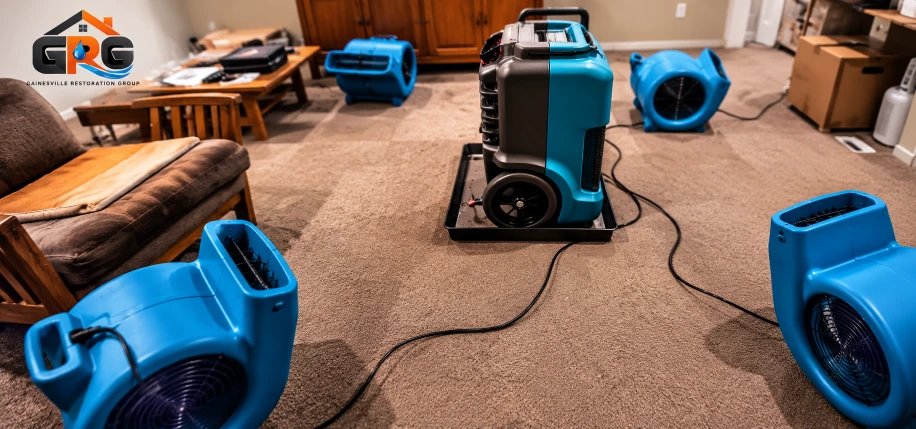
For larger or more widespread damage, water damage restoration in Gainesville, FL may include water removal, extraction, structural drying, cleanup, and other restoration steps.
Common Causes of Water Damage Cleanup in Gainesville
Water damage cleanup may be needed after:
- Burst or leaking pipes
- Plumbing fixture leaks
- Water heater failures
- Washing machine leaks
- Dishwasher leaks
- Refrigerator leaks
- Toilet overflows
- Sewer backups
- Roof leaks
- Storm water intrusion
- Heavy rainfall
- Flooding
Gainesville has a number of waterways and drainage areas that are part of the city’s stormwater environment, including Hogtown Creek and Sweetwater Branch. Heavy rainfall and severe storms can create conditions where water enters properties or overwhelms local drainage.
The type of water matters. Water from an indoor plumbing leak may require a different cleanup approach from outside floodwater or sewage-contaminated water.
What Areas Can Require Water Damage Cleanup?
Water does not always remain where it first appears. Depending on the incident, cleanup may involve:
- Carpet and carpet padding
- Hardwood and other flooring
- Subfloors
- Drywall
- Baseboards
- Ceilings
- Cabinets
- Walls
- Furniture
- Personal belongings
- Crawl spaces
- Areas beneath fixtures
- Areas behind cabinets
A floor may look dry while moisture remains underneath. A wall may look normal while water has reached materials behind the surface.
That is why proper assessment and moisture detection are important parts of the cleanup process.
Our Water Damage Cleanup Process
Every water damage situation is different, but a typical cleanup may involve several stages.
1
Inspect the Affected Area
The first step is to determine where the water came from and which areas or materials may have been affected.
2
Identify and Control the Water Source
The source of the water should be stopped whenever possible. Continued water intrusion can increase the affected area and make cleanup more difficult.
3
Remove Standing Water When Necessary
If water is still present, removal or extraction may be required before detailed cleaning and drying can begin.
4
Assess Affected Materials
Flooring, carpet, drywall, cabinets, furniture, and other contents are evaluated based on their condition and exposure.
5
Clean Affected Areas and Contents
Cleaning methods depend on the material and type of water involved. Contaminated water requires appropriate safety precautions and handling.
6
Address Materials That Cannot Be Restored
Some materials may be too damaged or contaminated to restore. In those cases, removal may be necessary.
7
Detect and Monitor Remaining Moisture
Visible dryness does not always mean the structure is dry. Moisture detection can help identify areas that still require drying.
8
Continue With Structural Drying and Restoration
Depending on the damage, affected materials may need additional drying before repairs and final restoration can take place.
The IICRC S500 Standard for Professional Water Damage Restoration provides industry guidance covering water restoration procedures, safety, building materials, drying technology, equipment, inspections, documentation, and related restoration work.
Water Damage Cleanup vs Water Removal
Water removal and cleanup are connected, but they serve different purposes.
Water Removal
Water Extraction
Water Removal
Focuses on removing unwanted or standing water
Water Extraction
Focuses on cleaning affected areas and materials
Water Removal
Often an early response step
Water Extraction
May continue after bulk water is removed
Water Removal
Reduces the amount of water present
Water Extraction
Addresses the condition left behind
Water Removal
May involve extraction equipment
Water Extraction
May involve cleaning, material assessment, and contents cleaning
Important:
Once water has been removed, the property may still need drying, moisture monitoring, and cleanup. When the damage extends beyond basic cleanup, Gainesville water damage restoration services can address the broader restoration process.
Residential Water Damage Cleanup in Gainesville
Water damage can disrupt a home quickly. A washing machine leak may affect a laundry room and nearby flooring, while a burst pipe can spread water into multiple rooms.
Residential cleanup may involve:
- Kitchens
- Bathrooms
- Bedrooms
- Living rooms
- Hallways
- Garages
- Carpet
- Hardwood flooring
- Cabinets
- Furniture
- Personal belongings
The goal is to identify the areas affected by water and determine what can be cleaned, dried, restored, or removed.
Commercial Water Damage Cleanup in Gainesville
Commercial water damage can affect both the building and the contents inside it.
Offices, retail stores, restaurants, rental properties, and other businesses may have water affecting:
- Floors
- Walls
- Ceilings
- Furniture
- Inventory
- Equipment
- Storage areas
- Common areas
Commercial cleanup also needs to consider access and business operations. The affected area should be assessed carefully so that cleanup and drying can be planned around the property’s needs.
For larger commercial incidents, commercial water damage restoration may involve additional drying, repairs, and restoration work after the initial cleanup.
Why Water Damage Cleanup Should Not Stop at Visible Water
One of the biggest problems after a leak or flood is that the visible water may represent only part of the damage.
Water can move underneath flooring, into carpet padding, behind cabinets, through wall cavities, and into other building materials.
A surface can feel dry while moisture remains underneath. If that moisture is not identified and addressed, the property may continue to have damp conditions.
The EPA recommends drying wet areas and materials within 24 to 48 hours when possible to help prevent mold growth. Actual drying time depends on the amount of water, materials involved, temperature, humidity, and other conditions.
Water Damage Cleanup After Flooding and Storms
Gainesville can experience heavy rainfall and severe storms that may contribute to flooding and water intrusion.
Water entering from outside is not necessarily the same as water from a clean indoor plumbing line. Floodwater can contain dirt, debris, microorganisms, and other contaminants.
If floodwater enters a property, avoid unnecessary contact with it. Electrical hazards may also be present if water has reached outlets, appliances, wiring, or electrical equipment.
Professional assessment can help determine the appropriate cleanup and drying approach.
Can Water Damage Cause Mold?
Yes. Water damage can create conditions that allow mold to grow when wet materials remain damp for too long.
Moisture can remain inside drywall, carpet padding, wood, flooring, cabinets, and other materials even when the surface appears dry.
Quick water removal, proper drying, and moisture control can help reduce conditions that support mold growth. The EPA recommends drying wet materials as quickly as possible, generally within 24 to 48 hours when feasible.
If mold is already visible or a property has extensive moisture damage, the situation may require additional assessment and remediation.
How Long Does Water Damage Cleanup Take?
There is no fixed timeline for every water damage cleanup project.
The time required can depend on:
- Size of the affected area
- Amount of water
- Source of the water
- Type of water involved
- Materials affected
- How long the materials remained wet
- Contents that require cleaning
- Drying requirements
- Materials that need removal
- Repairs needed afterward
A small isolated leak may require much less work than a major flood or sewage backup.
When Should You Call a Professional?
Professional water damage cleanup may be appropriate when:
- There is significant standing water
- Water has entered walls or flooring
- You cannot identify the source
- Sewage is involved
- Floodwater entered the property
- A large area is affected
- You notice a persistent damp odor
- You suspect hidden moisture
- Water has affected electrical areas
- The property has experienced repeated water damage
- You are unsure whether affected materials can be safely cleaned
Small, isolated incidents involving clean water may sometimes be manageable if they can be safely addressed immediately. Larger or contaminated situations require more caution.
Water Damage Restoration FAQs
Water damage cleanup may include assessment, water removal when necessary, cleaning affected surfaces and contents, material evaluation, moisture detection, drying, and recommendations for additional restoration.
The process usually starts by controlling the water source and assessing the affected areas. Depending on the situation, standing water is removed, affected materials are cleaned, remaining moisture is detected, and the property is dried.
Yes, in some cases. Materials that can be safely cleaned and dried may be restored. Materials that are severely damaged or contaminated may need to be removed.
It depends on the size and severity of the damage, type of water, affected materials, and amount of drying required. There is no single timeline that applies to every property.
If water has entered drywall, flooring, insulation, subfloors, cabinets, or other building materials, an assessment can help determine whether moisture remains inside the structure.
Prompt water removal, cleaning, and proper drying can help reduce moisture conditions that support mold growth. Fast moisture control is especially important after a leak or flood.
Insurance coverage depends on the cause of the damage and the terms of the policy. Certain sudden water losses may be covered, while flood damage and long-term maintenance issues may be treated differently. Check your policy or speak with your insurance provider for specific coverage information.
A small clean-water incident may sometimes be handled safely by a property owner. Professional help is recommended when there is extensive water, contaminated water, hidden moisture, significant structural damage, or uncertainty about how to safely clean the affected area.
Water Damage Cleanup in Gainesville, FL
Water damage cleanup is more than making a wet surface look dry. The affected area, building materials, contents, moisture levels, and type of water all matter when determining the appropriate next steps.
Gainesville Restoration Group provides water damage cleanup for residential and commercial properties in Gainesville, FL.